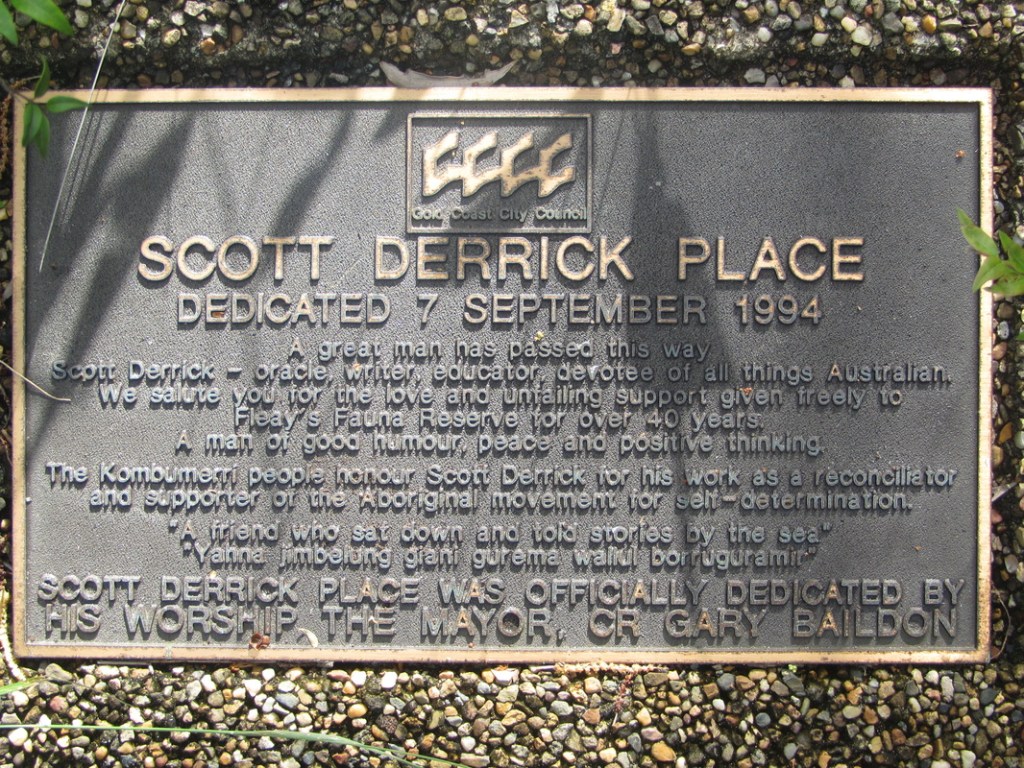
In 1990 Scott Derrick, respected journalist, historian and confidant of local Aboriginal people, gave a talk to yr 4 students at the Museum during “History week”. Here is an excerpt discussing the land on which the Museum now resides, along with some Indigenous lore.
“This area was a gathering spot, they came here on regular journeys and when they met, this was one of their meeting spots. They would meet in several different camp areas. In some parts of the ground here you can still see the shells they used when they were feasting / when they were having their meal. One very big difference between aboriginal society and white society is that aboriginal people never ever littered. They always put what they did not want or had finished with in the same place and that gave us things called middens, which is actually not an aboriginal word, but a Swedish one and originally means “kitchen” / “rubbish heap”. On this land was a great midden. For those of you who went to the kindergarten on the other side of the road, the midden went right through there to the park on the other side (Vespa Park). It was a huge area and the Kombumerri, who were the tribal people who lived here, they lived on this part of the land about 2,500 years ago. We are talking about people who lived on the land for 10’s of thousands of years. We can learn a lot about these people when we look at the ground where the Museum is.
When we look at their middens we can see what they did over the 1000s of years. We can take the shells for example and count them and we can know what they were eating. 10% of oysters, 20% shell fish etc. Thousands of years ago, Aboriginal children were sitting where you are. On you way home today, look out for the paperbark tree, the Melaleuca tree. Notice that they have white flowers on them and those white flowers always coincide when the mullet are running (swimming) up the Coast. So they came to this area when the Melaleuca started to bloom and they ate a lot of mullet. Inside the heads of all fish is a little round bone – which is different for every type of fish. Different bone for a mullet, to a flathead, to a bream, to a garfish. These are found in the middens, the shell mounds, so we know what type of fish they were eating.”
Transcribed from an old cassette tape recording by C Elek in 2025.
Scott Derrick Place is located near Fleay’s Fauna Reserve in West Burleigh.